


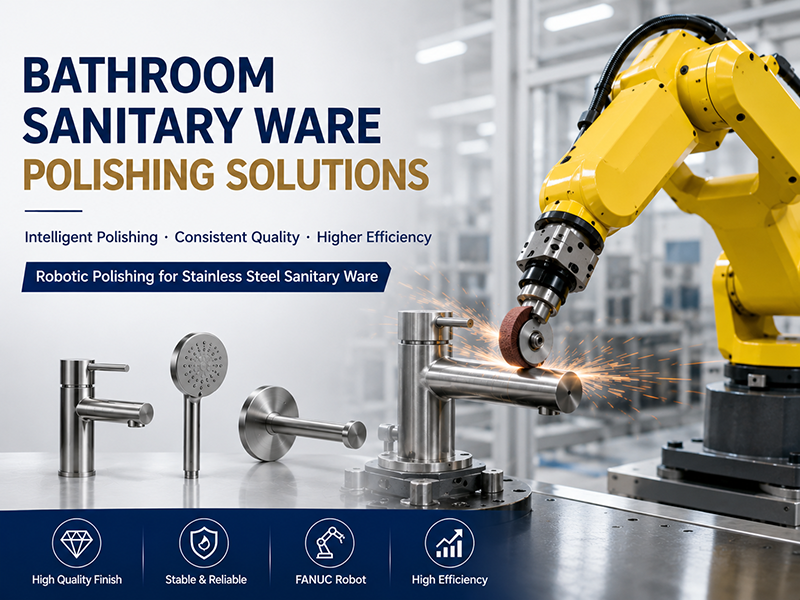

Common Polishing Defects
In metal surface finishing, polishing defects can significantly affect product quality, appearance, and performance. Understanding these defects and their causes is essential for improving production efficiency and achieving consistent results.
- Scratches
Description:
Visible lines or marks on the surface.
Causes:
- Improper abrasive selection
- Excessive pressure
- Dirty polishing tools
Solutions:
- Use appropriate abrasives
- Control polishing pressure
- Clean tools regularly
- Uneven Surface
Description:
Inconsistent surface smoothness or gloss.
Causes:
- Inconsistent force
- Manual operation differences
- Irregular workpiece positioning
Solutions:
- Use robotic polishing systems
- Improve fixture positioning
- Standardize processes
- Burn Marks
Description:
Discoloration due to overheating.
Causes:
- High friction
- Excessive speed
- Lack of cooling
Solutions:
- Reduce speed and pressure
- Use cooling systems
- Optimize polishing parameters
- Orange Peel Effect
Description:
Surface appears uneven like orange skin.
Causes:
- Poor polishing sequence
- Uneven material structure
Solutions:
- Optimize polishing steps
- Use finer abrasives
- Residual Oxide Marks
Description:
Visible oxidation spots after polishing.
Causes:
- Incomplete oxide removal
- Improper pre-treatment
Solutions:
- Pre-cleaning process
- Use grinding before polishing
- Over-Polishing
Description:
Excessive material removal or deformation.
Causes:
- Excessive polishing time
- High pressure
Solutions:
- Control processing time
- Use automated systems
- Poor Gloss Finish
Description:
Surface lacks brightness.
Causes:
- Incorrect polishing compounds
- Insufficient finishing process
Solutions:
- Use proper polishing compounds
- Add finishing steps
How Automation Solves Polishing Defects
Automated polishing systems significantly reduce defects:
- Consistent force control
- Repeatable processes
- Reduced human error
Ideal for achieving high-quality surface finishing.
Conclusion
Polishing defects are common but can be effectively controlled with proper processes and advanced equipment. By adopting automated polishing and robotic systems, manufacturers can improve quality, reduce defects, and enhance competitiveness.
If you are facing polishing defects or looking to improve surface finishing quality, we provide advanced automatic polishing machines and robotic grinding solutions tailored to your needs.